The Accountability Test: Reading a Fund Manager’s Letter for Substance
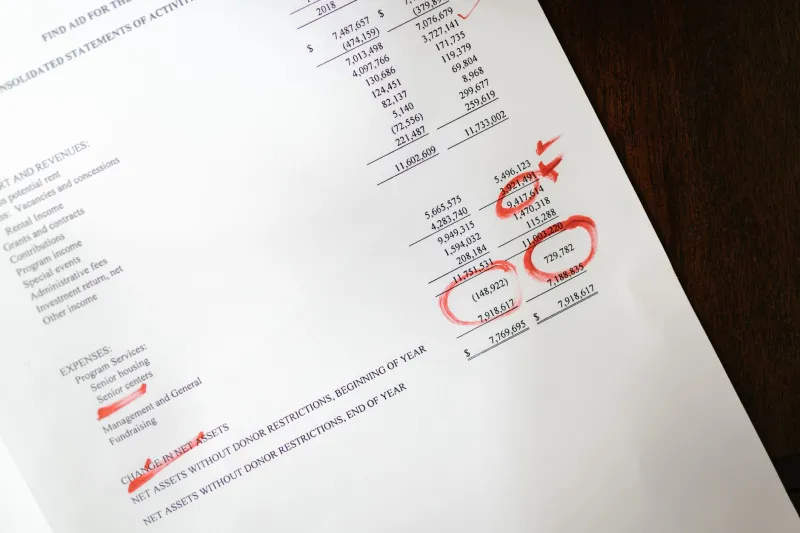
A fund manager’s letter arrives with the polish of an investor presentation: a performance chart, a few paragraphs about volatility, and a closing note of confidence. It is easy to skim. But for a long-term shareholder, the letter is one of the few recurring places where a manager speaks directly about judgment—what worked, what did not, and why the portfolio looks the way it does. Read as a stewardship document rather than a sales brochure, it can reveal more than the latest quarterly return.
At AFT Fund, we treat manager commentary as part of the due-diligence record. The goal is not to catch a manager in a single bad call. It is to judge whether the letter provides a usable account of the fund’s process and whether that account holds up over time.
Start with the document’s architecture
Before reading the argument, note the form. Who signs the letter—the portfolio manager, a chief investment officer, or a marketing team? Is it a letter to shareholders or a commentary appended to a fact sheet? Does it appear in the annual report, where it sits alongside audited financial statements, or only on a website? The annual and semi-annual shareholder reports required of US mutual funds are useful because they place commentary next to portfolio holdings and financial data. An ETF’s annual report can serve a similar purpose. Marketing pieces can be informative, but they are not a substitute for the formal record.
Length is a clue, not a verdict. A short letter can be candid; a long one can be evasive. What matters is whether the manager names specific decisions and outcomes. Compare the current letter with the one from a year ago. Consistency is valuable—but only if the story has not been retrofitted to match results.
What genuine accountability looks like
Accountability has a recognizable texture. A manager who is accounting for performance will usually:
- identify specific holdings or sectors that helped or hurt;
- separate process from outcome, acknowledging that a good decision can produce a poor short-term result;
- discuss opportunity cost—what the fund did not own, or sold too early;
- explain changes in positioning without hiding behind macro commentary;
- state what would prove the thesis wrong, not only what would confirm it.
Consider a hypothetical small-cap fund that underperformed its benchmark. A boilerplate letter might say the market favored larger, quality companies and that the team remains focused on long-term fundamentals. A more accountable letter might say the fund’s avoidance of a handful of unprofitable growth names hurt relative returns; that the team reviewed whether its quality screen was too strict; that it trimmed two positions where the thesis had weakened; and that it added a new holding at a valuation the manager can defend. The second letter may not be more optimistic. It is more useful.
Specificity is the test. Dates, holdings, weights, and decision points can be checked against the fund’s holdings disclosures and prior letters. Vague references to 'challenging markets' and 'our disciplined process' cannot.
Boilerplate optimism and its tells
Boilerplate is not always false. Markets are often volatile, and long-term processes do require patience. The problem is when generic language substitutes for an explanation. Watch for these patterns:
- Selective benchmarking. The letter compares the fund to a different index than the prospectus benchmark, or highlights a time period that flatters results.
- Definition drift. 'Quality,' 'value,' or 'growth' is redefined to fit the current portfolio rather than the mandate.
- Macro as alibi. Every shortfall is attributed to rates, inflation, or geopolitics, with no discussion of security selection.
- Confidence without conditions. The manager is 'well positioned' but does not say what that positioning depends on.
- Missing mistakes. A letter that never acknowledges a poor decision over several years is unlikely to be fully candid.
None of these alone proves a problem. Together, they suggest the letter is performing public relations rather than stewardship.
Strategy shifts: evolution or drift?
Fund strategies do change. A manager may widen a universe, adjust a valuation framework, or sell a position because the thesis has played out. The question is whether the change is explained and whether it remains within the fund’s mandate. Read the letter alongside the prospectus and the most recent holdings. If the fund now owns larger companies, holds more names, or carries more cash than it did two years ago, the letter should say why. If the explanation is that the opportunity set has changed, ask whether the fund’s capacity or asset base is part of the reason.
Long-term shareholders should be especially alert to shifts that make the fund easier to scale. A strategy that once focused on a limited number of ideas may broaden its holdings after asset growth. That can be a reasonable response to capacity constraints, but it can also dilute the edge that attracted investors. The letter should address the trade-off directly.
For US fund shareholders, accountability also runs through the fund board. Directors oversee the adviser contract and review the fund’s performance and fees. The manager’s letter is not a substitute for that oversight, but it can inform questions you might raise—or simply help you decide whether the fund still fits your plan.
A short reading routine
Keep the letter. Before reading, pull the prior year’s letter and the current fact sheet. Then:
- Mark every specific holding, sector, or decision named.
- Circle every claim about the future that could be checked later.
- Note whether the manager acknowledges at least one decision that did not work.
- Compare the portfolio’s current shape with the strategy described in the prospectus.
- Ask whether the letter explains changes in holdings, not just market conditions.
One letter is a snapshot. A sequence of letters is a record. The most useful question is not whether the manager sounds confident today, but whether the explanation has become more specific, more honest, and more consistent with the portfolio over time. That is the accountability test.